Matt Molloy on Security, Compliance & Scale in Onchain Yield

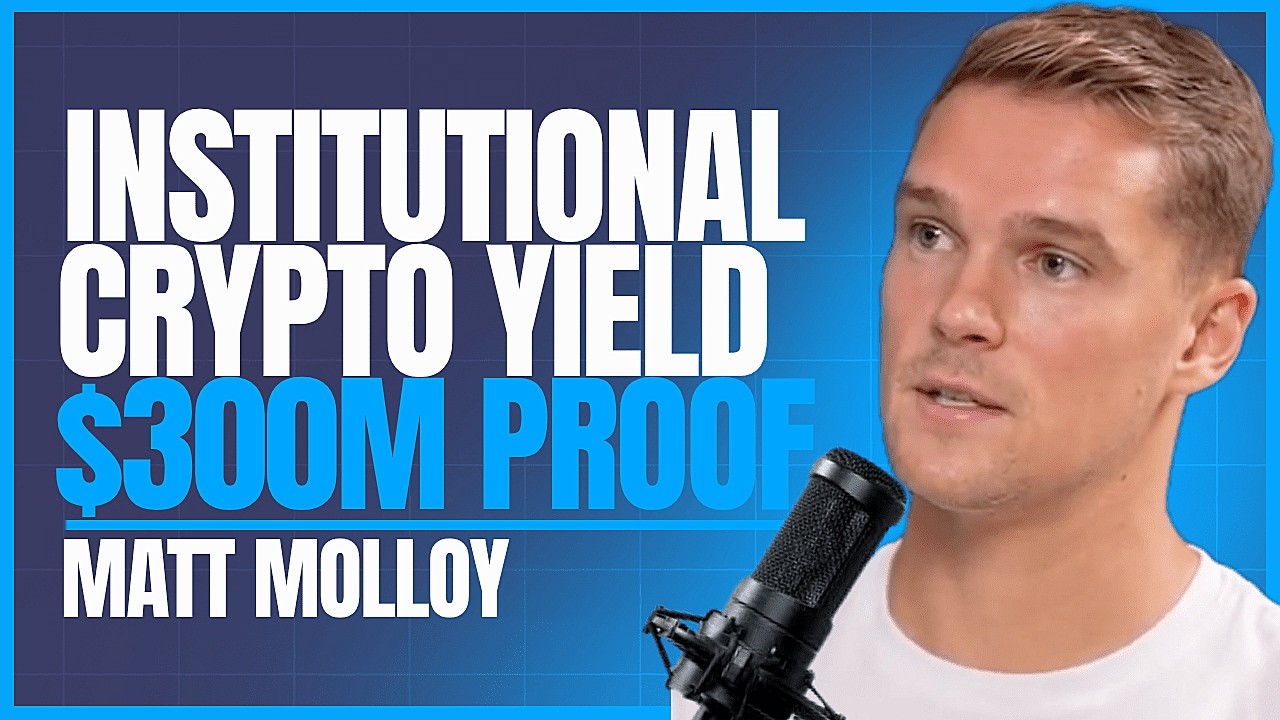
TruYields CEO and Co-Founder Matt Molloy joined Arabdha Sudhir, SVP Marketing at Halborn, on Halborn Flash Videos to discuss what it takes to make onchain yield work for institutions.
The conversation covered Matt's path from traditional finance into digital assets, the evolution from TruFin to TruYields, the company's three product lines, and why security, compliance, transparency and workflow fit are central to institutional adoption.
The core theme was clear. Institutional-grade onchain yield is not just about access to yield. It is about the operating standards that make yield usable by regulated institutions.
From TruFin to TruYields
TruYields began life as TruFin, focused on solving the structural problems with staking, principally illiquidity and capital efficiency. Matt described the move to TruYields as a deliberate broadening from a staking-led story into institutional yield infrastructure built around the assets institutions actually hold. Today the platform spans three product lines: TruCore for tokenised RWA and USD yield, TruStake for institutional liquid staking, and TruVault for curated vault strategies.
“It's really about accessing onchain yield, whether that's for institutional clients holding native crypto assets or US dollar based assets,” Matt explained. The takeaway for buyers is breadth: a single operating framework across crypto-native and dollar-denominated yield, rather than exposure to a single product.
What Institutional Grade Actually Means
This was the heart of the conversation. Matt was direct that the term gets used loosely across the industry, and set out four requirements TruYields holds itself to. First, permissioning: every participant that mints and redeems directly goes through defined KYC and KYB onboarding with the relevant AML checks. Second, workflow fit: the way clients access the product has to be consistent with their internal approvals, policies, custody integrations and reporting requirements. Third, security and audit readiness, assessed on an ongoing basis rather than only at the point of audit. Fourth, transparency over where assets are held and what controls govern vault curators and permissible protocols.
“We see institutional grade as four key things,” Matt said. The commercial point is that, for regulated allocators, the operating model around the yield often decides suitability more than the headline rate does.
Why Solana-First Matters
Matt was clear that being Solana-first is a utility decision, not a branding one. Bringing assets onchain is only the starting point. The value comes from clients being able to use and trade those assets freely across the ecosystem, which depends on high throughput, fast finality and low transaction costs.
“We don't want them to just mint, redeem and hold. We want them utilising those across the ecosystem,” he said. In other words, an asset is valuable because it can move and be used, not simply because it has been tokenised.
Security as an Ongoing Discipline
TruYields has worked with Halborn for around two years, a relationship that began through referrals and Halborn's standing in institutional and DeFi security. Matt framed security and audit readiness as continuous work rather than a one-time exercise.
“It's been a brilliant experience so far,” Matt said. The Halborn relationship is part of a wider trust posture: ongoing auditing, transparency over controls, and audit readiness treated as a standing commitment rather than a box ticked before launch.
Strategic Backing and the Road Ahead
Matt also reflected on the recent investment round, which brought SC Ventures (Standard Chartered) and FalconX onto the cap table alongside existing investors Brevan Howard Digital and Laser Digital. He framed it as strategic capital and institutional validation rather than funding for its own sake, supporting expansion across tokenised RWAs, US dollar denominated yield and curated vault strategies.
“It's a seal of approval more than anything else,” he said. For an institutional yield business, that kind of backing matters as much for distribution and credibility with regulated counterparties as for the capital itself.
Looking ahead, Matt also pointed to regulatory developments such as MiCA in Europe and the GENIUS Act in the US as part of a broader shift toward clearer rules for digital asset markets. For institutional allocators, that clarity is one of the conditions that can help more capital move onchain with confidence.
Watch the Full Conversation
The full conversation covers Matt's journey, the TruYields product line and the outlook for institutional onchain yield over the next 12 to 18 months. Watch the full Halborn conversation here.